
Hair loss and thinning
Telogen effluvium, female pattern hair loss
Chronic conditionExtra shedding or gradual thinning of the hair on your scalp. Most hair loss in women isn't autoimmune, and many causes, such as low iron or a recent illness, can be found and treated.
Medical Disclaimer
For education only — this guide can't diagnose you. If these signs sound familiar, talk with a healthcare provider. Book a consult
What happens
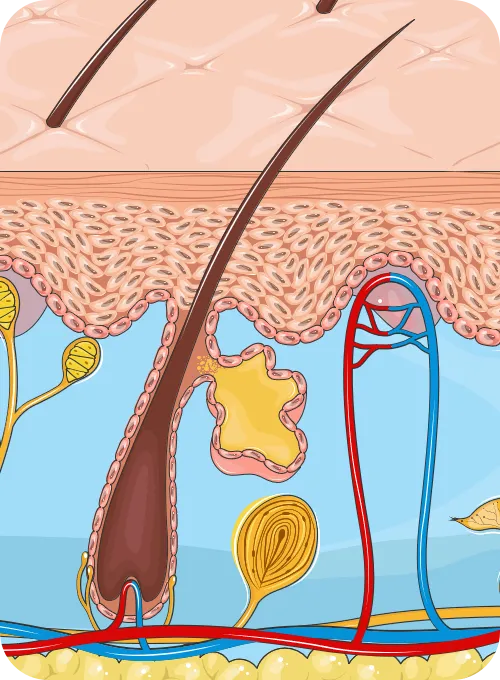
Each hair grows for years, rests, and then sheds. A shock to the body, such as a high fever, surgery, childbirth, major stress, or crash dieting, can push many hairs into the resting phase at once. About 2 to 3 months later, they fall out in large numbers. This is called telogen effluvium, and it usually recovers within 6 to 12 months once the trigger passes. Female pattern hair loss is different. Follicles slowly shrink, so the part widens and the crown thins over years. It runs in families and is shaped by hormones. Low iron stores, thyroid disease, and some medicines can cause or worsen either type. Patchy, round bald spots point to alopecia areata, which has its own page.
Who gets it
Hair loss is common in women of every age. Shedding often follows childbirth, stopping birth control pills, illness, surgery, or rapid weight loss. Female pattern thinning becomes more common in perimenopause and after menopause. Heavy periods, a plant-based diet, PCOS, and thyroid disease all raise the risk.
Signs worth getting checked
- More hair than usual in the shower drain, brush, or pillow
- A widening part or thinning on the top of the head
- A ponytail that feels thinner
- More scalp showing under bright light
- Thinning at the temples
- Shedding that starts 2 to 3 months after illness, birth, or stress
- Fatigue, feeling cold, or brittle nails along with hair loss
Labs to ask about
- Ferritin, since low iron stores are a common, fixable cause
- CBC to check for anemia
- TSH and free T4
- Testosterone, DHEA-S, and other androgens if you also have acne, extra hair growth, or irregular periods
- Vitamin D, zinc, and B12 when diet or history suggests a gap
- A scalp exam, and sometimes a biopsy, to tell the type of hair loss apart
Treatments your doctor may discuss
- Topical minoxidil, the best-studied treatment for female pattern hair loss
- Low-dose oral minoxidil from a prescriber, an option when the topical form is hard to use or isn't enough. It's not safe in pregnancy.
- Spironolactone, which blocks androgens and may help hormone-related thinning. It's not safe in pregnancy.
- Treating the cause, such as iron for low ferritin or thyroid medicine for hypothyroidism
- Reviewing medicines and birth control that may affect hair
Supportive steps to discuss with your provider
- Eat enough protein and calories. Crash diets often trigger shedding a few months later.
- Ask for ferritin and thyroid testing before buying hair supplements.
- Skip biotin unless a test shows you're low. It rarely helps hair in people who aren't deficient.
- Stop biotin 3 days before blood tests and tell your provider you take it. It can skew thyroid and troponin results.
- Give any treatment 6 months before judging it, and take photos to track changes.
See a doctor promptly if you have
- Round, smooth bald patches, which may be alopecia areata
- Hair loss with scalp pain, redness, burning, or scarring
- Sudden thinning along with acne, a deeper voice, or fast-growing body hair
- Shedding that lasts longer than 6 months
- Hair loss along with fatigue, weight change, or heavy periods
Related conditions

Ready to find the root cause?
Dr. Lesher is a Naturopathic Doctor who focuses on autoimmune and chronic conditions in women. Since 2020, she's helped hundreds of patients stop managing symptoms and start healing.